ශ්රී ලංකා ප්රජාතාන්ත්රික සමාජවාදී ජනරජයේ කොන්සල් ජෙනරාල් කාර්යාලය, මුම්බායි
இலங்கை ஜனநாயக சோசலிச குடியரசின் துணைத் தூதரகம், மும்பை
Consulate General of the Democratic Socialist Republic of Sri Lanka, Mumbai
Remarks by the Consul General at the Book Talk on Colombo: Port of Call Sri Lanka Consulate General, 23 April 2026
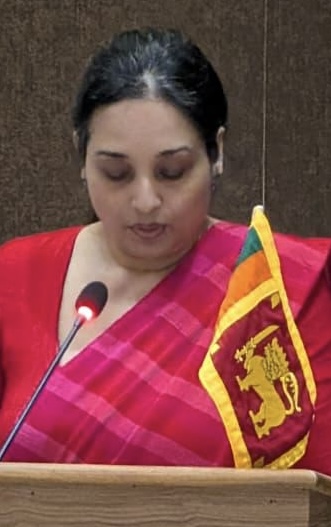
Ladies and gentlemen, let me welcome all of you to the second edition of our ‘Book Talk’ series.
I am Priyanga Wickramasinghe, Consul General of Sri Lanka in Mumbai.
I explained the rationale for this book talk series at the first such event at which some of you were present. I believe that diplomacy is not only about how international relations are conducted in the formal and conventional sense. It is also about how modes of culture that may vary from creative literature to academic texts, films to theatre and visual arts more generally could become a more creative avenue for conversations in a world that is becoming increasingly stressful.
So, as a diplomat with an interest in how soft diplomacy works, I am keen to see how Ajay Kamalakaran’s book opens doors to other readings about what has come to Sri Lanka through harbours and other gateways as well as what has come from Colombo and Sri Lanka to the world. That is, how people, objects and ideas move and often take root in new locations.
My sense is, Colombo: Port of Call allows for this opening, and I want to travel through that doorway which Ajay has flung open.
But let me first begin by what the book is in my own understanding. It is for sure a very readable and non-linear journey through Sri Lanka’s commercial capital, Colombo across time, combining two important elements: these are historical reportage and personal observation and commentary.
It moves away from the narrative formats and language styles usually adopted by genres of academic history which tend to be somewhat dry despite the knowledge they might present. This book in contrast is a social and cultural biography of Colombo touched and shaped by multiple dynamics including colonization, trade, and migration.
It is also about the evolution of Colombo from the status of a strategic colonial outpost to a bustling modern city. Ajay does something that is often forgotten in contemporary times. That is, he outlines the city’s cosmopolitan personality, highlighting its diverse communities that have made it their home over time all of whom have left an indelible mark on its architecture, spatial formations and social fabric. If one forgets the reference to Colombo for a moment and allows imagination to run a bit wild and blur the specifics but dwell on the generalities, it might as well be a description of Mumbai. People often forget how similar these places are except in size and complexity. I will leave it to other panelists and Ajay himself to talk about in detail what the book actually says.
But Colombo is not only a port of call. It is also a gateway through which people and objects left. It would be interesting to see a book that narrates this inverse story. Sri Lankan businessman P.S. Jayasinghe established in Mumbai in 1943 India’s earliest and best-known press for scholarly works, Asia Publishing House which published well-known texts such as Jawaharlal Nehru’s A Bunch of Old Letters and Rabindranath Tagore’s Towards Universal Man. Sri Lankan modernist painter George Keyt came to Mumbai through Colombo where he held his first international solo exhibition at the Convocation Hall at University of Bombay in 1947. His time in Mumbai had a lasting effect on his work. Sri Lankan cultural activist Anil de Silva who along with well-known Indian writer Mulk Raj Anand and others founded the Mumbai-based cultural magazine Marg in 1946. These are simply a handful of people whose travel to the world from Colombo made a difference in their times and in their contexts. And there are many more. I was wondering if there is a story in these histories too in the same way Colombo: Port of Call narrates its story.
What about objects and practices that came from Sri Lanka and went there as well, in the same way that people did. But objects and practices came and went with people too. I have been told more than once that the very iconic Kerala parotta originated in Sri Lanka before being brought to Tamil Nadu and later popularized in Kerala. Initially it was supposed to have been introduced to coastal Tamil Nadu as ‘Ceylon Parotta’ by migrant workers, later evolving into the flaky Malabar version. Sri Lanka’s noodle-like indiappa and pancake-like appa known in Kerala and Tamil Nadu as indiappam and appam respectively perhaps came to us from those two Indian states. What Sri Lankans referred to as ‘bombai loonu’ meaning big onions, ‘kochchi’ meaning a very specific version of green chilli and ‘kolikuttu’, a specific variety of plantains perhaps came from the Indian cities of Bombay (Mumbai), Kochi and Calicut which still bear their sounds in the Sinhala names. Perhaps initially these things came to my country through colonial period trade.
I was wondering as I was reading through Ajay’s book, if we can narrate social and migratory histories by looking at the way these foods travelled and established themselves in places like Lanka as essential aspects of both local cuisine and languages. I don’t see much difference between these inanimate things and the characters in Ajay’s book. But for them to narrate the past and tell stories, we have to bring them and the trajectories of their travels to life. Perhaps there is another book here that will allow us to see the ways in which South Asian histories have been intertwined in interesting ways much of which we may have forgotten by now.
I wondered how Ajay selected his characters, all of whom are historical figures. They are the ones who bring to life their times and what they saw in Colombo. I understand the inclusion of well-known figures such as Urabi Pasha, Prince Hirohito, Andrew Carnegie, Arthur Conan Doyle, Mark Twain, Don Bradman, Mary Carpenter, M.K. Gandhi, and Anton Chekhov. But it is not clear to me the rationale for including lesser-known travelers such as Esper Ukhtomsky, Nicholas Roerich, Prince Chakrabongse Bhuvanath, Jules Leclercq, and Jane Sherman. Is it because the historical information available on them and what they say and saw add more colour to the text that Ajay has crafted?
I am also curious as to why I do not meet in the pages of the book some iconic figures who also came to Lanka through Colombo at different times. These include Jawaharlal Nehru’ s multiple visits in 1931, 1939, 1947, 1957 and 1962; Ernesto ‘Che’ Guevara’s visit to Sri Lanka in 1959 and Marshal Tito’s visit in 1959 to discuss the Non-Aligned Movement (NAM) and then again in 1976 to attend the 5th NAM summit. Rabindranath Tagore visited Sri Lanka three times in 1922, 1928, and 1934. Pablo Neruda, was in Lanka between 1929 and 1930 during his so-called ‘Luminous Solitude’ period about which much has been written too. This is only a handful of visitors I do not meet within the pages in Ajay’s book. While an author has the absolute freedom to make such choices, I am keen to know what the methodology for selection was. I can also see potential for another volume through which different takes on our country might be further expanded and offered to readers.
Coming back to what is in the book, Ajay captures well the color and life of specific neighborhoods, from the buzzling commercial life of Fort to the chaotic but functional personality of Pettah to the tree-lined and green areas of Cinnamon Gardens. But what he describes is not a flat nostalgic and rosy picture. He delves into the city’s unhappy moments and scars too touching upon the impact of the civil war and the fast-paced urban transformations of the 21st century which are also essential parts of my own life.
Coming from a languages and humanities background prior to joining the Foreign Service, I can see Ajay’s language is highly accessible, marked by a sensible journalistic clarity and an affectionate, yet clearly objective, tone. I can see from his description that Sri Lanka for Ajay is not just a place to write about, but more importantly a place he is clearly fond of, which reminds me of my own affection towards Mumbai as if it’s a more complex reliving of Colombo itself.
I will conclude by using a Sri Lankan example of food as a metaphor to capture the spirit of Ajay’s book. It is like a delightful platter of what we call ‘shorteats’, meaning mouth-watering snacks one can eat as one wishes without any specific order. Ajay’s book does not have to be read in a linear fashion. You can begin from the end or middle and read as you wish. In the end, like a good meal of ‘shorteats’, it will keep you satisfied. It is an interesting and thoughtful take on my city. It treats the city not simply as just another location, but as a living, breathing place with its own very specific character.
Let me now introduce very briefly our panelists for today.
Kalpana Swaminathan is an award-winning writer from Mumbai. She is best known for her 'Lalli' detective novels. She also writes with Ishrat Syed as Kalpish Ratna. Swaminathan and Syed are both surgeons. Together they have published more than 20 books. Swaminathan won the 2009 Vodafone Crossword Book Award (Fiction) for Venus Crossing: Twelve Stories of Transit.
Gautam Pemmaraju is a Mumbai-based writer, researcher and filmmaker, and creative consultant. He has directed the film 'A Tongue Untied: The Story of Dakhani.' His upcoming book 'One Man Against an Empire: M. N. Roy, British Intelligence and the Colonial Surveillance State' will be published in the UK in November 2026.
Ajay Kamalakaran is a journalist, writer and linguist, based in Mumbai. He has lived in the United States and Russia and has been a regular traveller to Sri Lanka since 2003. Ajay is the author of Globetrotting for Love and Other Stories from Sakhalin Island and A Week in the Life of Svitlana. His articles regularly appear in Scroll, Russia Beyond, Open, Manorama Online, National Geographic Traveller and other publications.
***
Remarks by Consul General at the Book Talk on Decolonial Keywords: South Asian Thoughts and Attitudes Sri Lanka Consulate General, 29 January 2026.
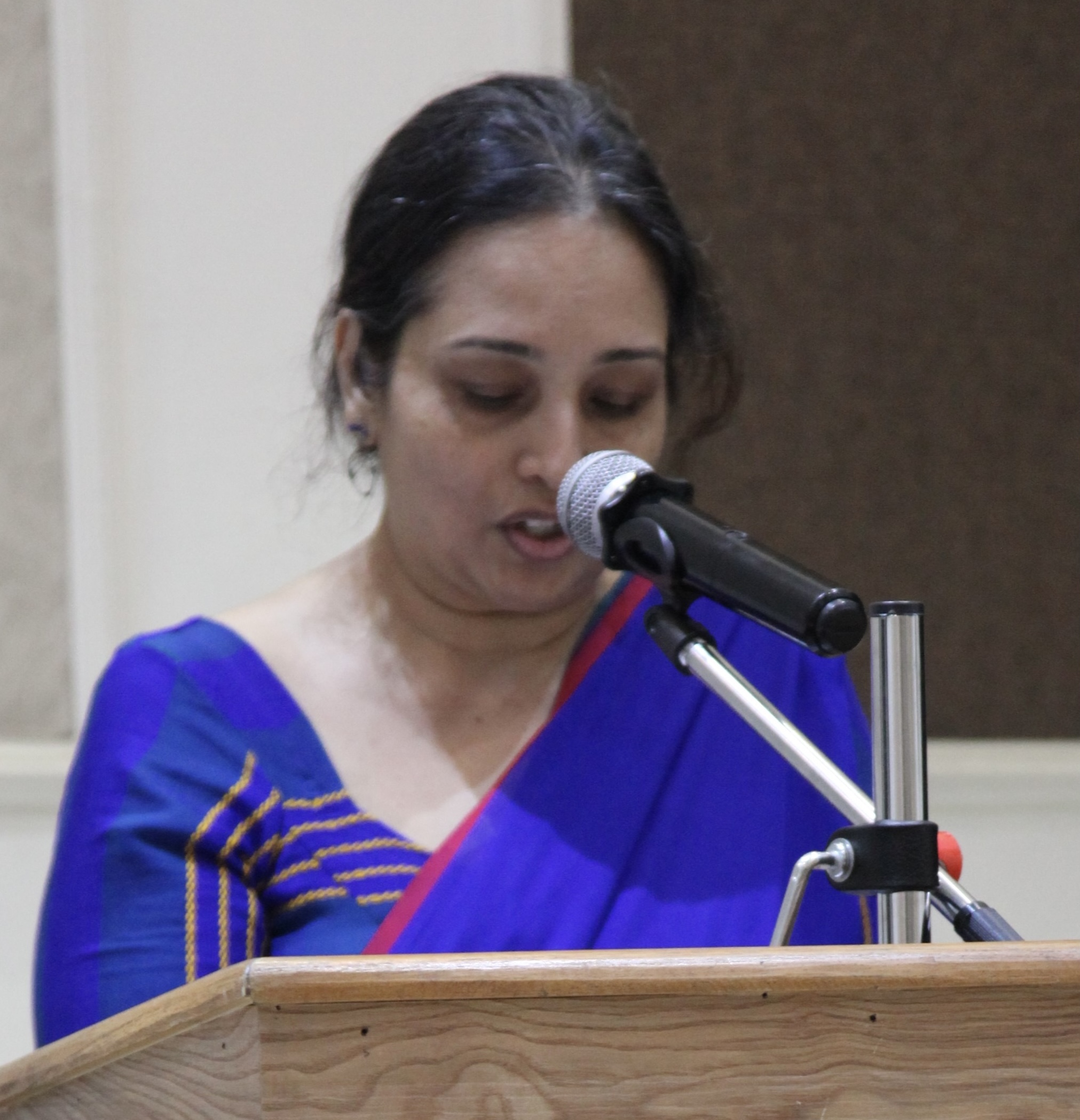
Ladies and gentlemen, let me welcome all of you on behalf of the Sri Lanka Consulate General in Mumbai to the first edition of our ‘Book Talk’ series.
I am Priyanga Wickramasinghe, Consul General of Sri Lanka in Mumbai
Let me briefly explain the rationale for this series. We believe that diplomacy is not only about how international relations are conducted in the formal and conventional sense. It is also about how modes of culture that may vary from creative literature to academic texts, films to theatre and visual arts more generally could become a more creative avenue for conversations in a world that is becoming increasingly stressful.
But the books that we discuss here will necessarily have a global or South Asian reach towards which there would be a tangible Sri Lankan contribution.
For instance, Decolonial Keywords: South Asian Thoughts and Attitudes that will be the focus of our conversation has been edited by Renny Thomas, from India and Sasanka Perera from Sri Lanka. Among the 30 essays that deals with a variety of ideas, four are from Sri Lanka focused on the Sinhala language.
Other languages represented in the book include, Sanskrit, Tamil, English, Hindi, Urdu, Assamese, Nepali, Sinhala, Hebrew Malayalam, Arabic Malayalam and a number of advasi languages or words that have become important in Dalit discourses. But all these are part South Asian discourses that clearly generate ideas within the contexts in which they are used.
Beyond this, it offers an interesting means to imagine South Asia that does not depend on geographic, physical or international borders. Instead, the volume looks at keywords from South Asia’s languages that cut across these borders over time.
My understanding is that the editors and the individual contributors wanted to see how words, concepts and attitudes from South Asia could contribute towards theorizing social sciences and humanities in our region. I will leave it to the panelists to discuss this in detail. But clearly, they are attempting to offer a leading role in thinking to scholars in this region rather than always banking on the west to come up with conceptual categories for disciplines as they evolve in the region.
As we proceed with the series, let me flag the kind of works that we might be interested in. For instance, we can think of the book, A Critical History of Women’s Health in Modern Sri Lanka by Darshi Thoradeniya from University of Colombo and Home Across Borders: An Ethnography of Sri Lankan Immigrants in Australia by Jagath Bandara Pathirage from the same university.
Both are published and distributed globally. It is our belief, despite the focus on Sri Lanka, such scholarship offers much space for comparative readings across cultures and socio-political borders. While I only referred to two academic texts, our interest is also focused on fiction and poetry, published in English and available globally that can speak to the world.
Let me now introduce very briefly our panelists for today.
Dr Renny Thomas, one of the coeditors of the volume under discussion today is Assistant Professor of Sociology and Social Anthropology at the Indian Institute of Science Education and Research, Bhopal
Dr Pankaj Sekhsaria is a Writer and Associate Professor of Science & Technology Studies at the Centre for Technology Alternatives for Rural Areas in IIT Bombay. He is also one of the contributors to this volume.
Dr Himanshu Burte is Associate Professor at Ashank Desai Centre for Policy Studies, IIT Bombay
I would now like to invite Dr Renny Thomas to take over and initiate the proceedings. He will begin with an introduction to what the volume has attempted to achieve and will invite the other speakers to reflect on what the volume means to them as a contributor or as reader.
***
Remarks by Consul General at the Sri Lanka Destination Wedding Show ITC Grand Central Mumbai, 7 September 2025
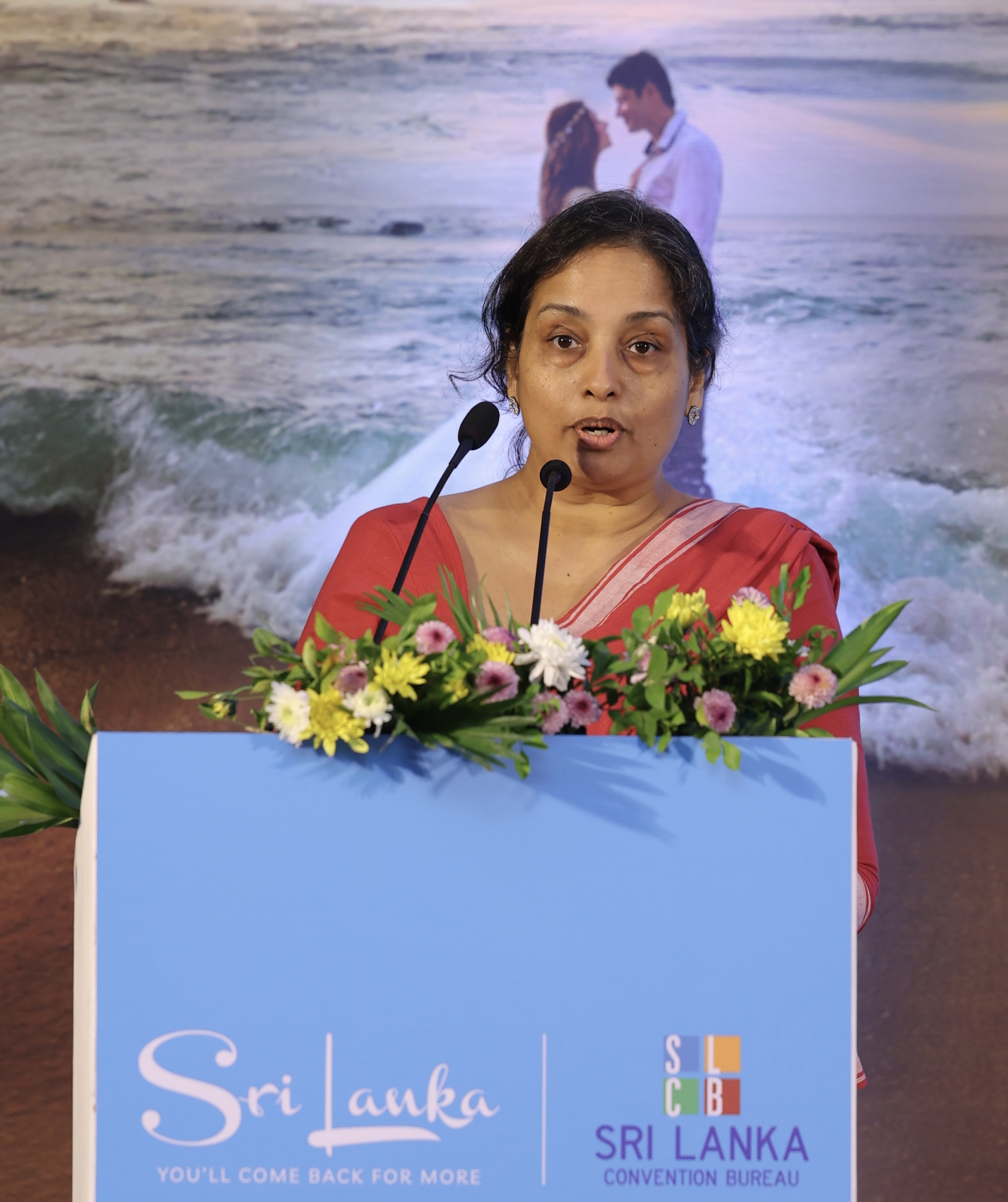
Ayubowan, good evening.
To begin with, as the Consul General of Sri Lanka in Mumbai, let me welcome you to the Sri Lanka Destination Wedding Show.
As you know, the kind of wedding this show hopes to promote squarely falls within international tourism and travel. While I will leave it up to my colleagues from Sri Lanka Tourism and other representatives from Sri Lanka travel sector to talk about the specificities of what is on offer and what is possible in the wedding landscape in Sri Lanka, I want to locate the idea of a wedding or getting married across international borders in its broader context marked by international travel and the need to expand the cultural scope of tourism itself.
Usually, discourses on tourism are about arrival and departure statistics, hotel occupancy figures, service provision indices, revenue for governments and travel industry, descriptions of tourist sites and so on. While all these are certainly important considerations, tourism and travel within which wedding planning will ultimately be located, are also about culture, knowledge and potential for soft diplomacy in times to come.
It is in such a context that the 19th and early 20th century writer, Mark Twain noted, “one must travel to learn.” Indeed, I think it is important not only to organize one’s wedding in Sri Lanka, but equally to learn about Sri Lanka in a more nuanced sense through that experience similar to what Mark Twain suggested.
In other words, why not try to replicate the words of the 14th century traveler, Ibn Battuta who travelled to both Sri Lanka and India and observed, “traveling – it leaves you speechless, then turns you into a storyteller.” In the time of the advances made in digital and telecommunication technology, because of which everyone is both a photojournalist and commentator on social media, I think it is imperative for a country like ours to not only offer the best possible wedding packages as this show attempts, but also make the people who opt for a wedding in Sri Lanka to also become veritable story travelers of their experience. That is, both their wedding as well as the people and places they encountered during their sojourn in Sri Lanka. What better endorsement can one expect than those rooted in experience?
What is on offer in Sri Lanka for travelers – including for those who travel for weddings – are an integral part of the global tourism discourse, ranging from the country’s wildlife, forests and beaches to ancient citadels and temples.
As we plan for newer inroads into wedding planning and related travel, I think this conventional focus on Sri Lankan tourism should be further expanded into areas Sri Lanka can and should expand but so far has not. For instance, shouldn’t the travel and wedding agenda coincide with the country’s emerging literary and publishing scene in English by focusing on some of the local literary festivals?
Similarly, coming to visual culture, why not open post 18th century frescoes particularly in Buddhist temples also as guided destinations for travelers? Sri Lanka also has one of the most dynamic contemporary art scenes in South Asia, which has been going on since at least the 1980s. Some of these artists will be showcasing their works at a major Sri Lankan exhibition at Bikaner House in Delhi on 14th September. Why not make their studios, homes and their engagement in art a part of the tourism experience, notwithstanding that their works are now being seriously acquired globally including in India.
What I am trying to say is, as we plan and promote Sri Lanka as an ideal wedding destination, it should also be presented as a destination of both contemporary and ancient culture, sophisticated and nuanced contemporary art and literature, cuisine, beaches, wildlife, temples and so on. In other words, our tourism discourse can be creatively rethought and made more complex, and thereby also opening more avenues for future international travel towards Sri Lanka. I think such openings, if well thought out can also be modes of soft diplomacy for Sri Lanka.
As this show gets underway and Sri Lanka Tourism promotes Sri Lanka as a wedding destination, we also need to note that the year 2025 began with a positive note for Sri Lanka Tourism, with four international tourism endorsements, coming from the Lonely Planet, Vogue Magazine, the BBC Travel Guide and from the Travel & Tour World. These are significant global accolades up to now, this year alone.
All this means, when Sri Lanka Tourism as an agency of the Sri Lankan government and travel sector operators in the country have come forward to promote Sri Lanka as a wedding destination, those intentions and plans have to be understood within the established track record in tourism the country already has along with our legendary hospitality, which has been globally recognized.
So, let me congratulate Sri Lanka Tourism, the Sri Lanka Convention Bureau and others involved for their hard work in organizing this event. My office would be happy to collaborate within our mandate in future promotions. Once again, I would like to welcome all of you, and wish you an enjoyable and enlightening evening.
Thank you.
***